Showing posts with label work. Show all posts

Saturday, July 02, 2011

Most adventurous birthday

This year’s birthday was pretty special even though I didn’t get to spend it with any family members or close friends. We had an early breakfast and head out to Poza Azules, one of the ponds in the Cuatro Cienegas Valley. I get to go along this trip because two of the grad students in the team here, JR and JC, are monitoring the limnology and hydrology of the pond systems in the Cuatro Cienegas Valley. Poza Azules is named for its blue color. It is a decent sized pond but just one look at it will take your breath away. The blue color is due to carbonate precipitates of the high metal content in the area.

Poza Azules
It definitely made me wish we could swim in there. However, it is no longer open for swimming due to the negative human impact on the stromatolites (structural outcome of the interactions between microbes and chemicals in the water column). In the picture below, the stromatolites are the spherical looking sponges in the water. 

Stromatolites at Poza Azules
The plan for that morning was to sample only two sites but as we were driving towards the second pond, JR noticed that the GPS showed another site of interest, Poza Tio Candido, to be very close to us. As it was still pretty early, we decided to check it out. We parked by the path and walked according to the direction provided by the GPS. A first timer here, GPS coordinates are very important! A lot of the landscape looks very similar. If it weren’t for the mountains surrounding the valley, I would not have a good sense of where North is (the Sun is not always helpful because it stays right above us for a good part of the day).

As we walked to Tio Candido, I had an unfortunate encounter with a pile of old cactus. Throughout the entire trip, I wore my Teva flip-flops as we often had to get really close to the pond where the ground is muddy and we are likely to sink. It is easier to clean and wash off with flip-flops than when wearing sneakers. I was looking around the area as we were walking instead of looking down. All of a sudden I felt sharp pain on my foot and realized that I had stepped onto a pile of old cactus. JR had to remove my flip-flop and individually remove all the cactus torns that got stucked to my flip-flop while I balanced on JC as at that position, I was surrounded by cactus. Phew, lucky thing that it was old cactus and the torns were more brittle.  
Tio Candido
Unlike Poza Azules, Tio Candido has a completely different ecology. The vegetation around and in the pond is much denser. We also got to see some turtles and frogs on the lily pads. It is just amazing to see all these water bodies in the desert and each of them has their own unique ecology. 

The channel feeding into Tio Candido
After we sampled Tio Candido, we head towards the last sampling site for the day, Poza Escobedo. On the way there, we passed by a cattle ranch. The pond there looks completely different, like an oasis in the middle of the desert. The grass around the ranch definitely looks like it is well fertilized by the cattle. While the green grass looks really fresh in the desert, it just feels weird standing around it. It does not seem to fit in the desert. Furthermore, the pond is extremely green, which is worrisome because it can be polluting downstream water. 

The pond by the cattle ranch
The last pond for the day, Poza Escobedo, was named after a revolutionist, Escobedo. The fort that he had fought in still stands near the pond. 


Escobedo Fort
The fort is just a square building with an entrance and two windows. Poza Escobedo is formed from karstification, which is when the minerals dissolved and the ground is eroded, allowing the ground water to rise above the ground level. This pond also has high mineral content, causing the water to have a bluish color. However, unlike Poza Azules, Escobedo does not have all the stromatolites growing on the sediment. This makes the pond looks like a clear blue glass with the sediment so white and clean. 

Poza Escobedo
Clear water of Poza Escobedo
While these ponds are pretty far apart, some of the ponds in this valley are connected underground. Driving through the dessert, one often sees a water body that appears and then disappears underground. While the entire terrestrial ecosystem is pretty stable, the wetland ecosystem is not at all. Talking to the researchers in the group and also some of the conservationists in town, the water levels in the ponds and the structure of ponds can be highly variable. It is definitely a very fragile ecosystem. This is why it is had caught the interest of environmental organizations such as World Wildlife Fund and the Nature Conservancy.  

We travelled to all these ponds with the guide of a biologist from Pronatura, a local non-profit organization that is responsible for the conservations of various ecosystems in Mexico. His group had started a project to try to create a wetland to attract migratory birds to the valley. To do that, they created a dam at one of the river that runs in the valley. It was a great opportunity for us to look at some of the conservation projects that goes on in the valley. 

The river that was dammed.
The area in which the wetland will be created. 
It was an extremely hot and long day but definitely very educational and interesting. 

Saturday, June 18, 2011

Cuatro Cienégas Part III: The Lab

Here at CC, there is no real field lab - the 'field lab' was setup in the cabin we live in. Unlike the KBS sampling trips back at MSU, where the sampling trip is solely sampling and no sample processing, we do have to pack for some sample processing for this Mexico trip. For example, we have to prep for water filtration, spiking samples with formaldehyde or RNA Later, adding chemicals to some of the water samples for chemical analysis or preparing samples that are to be frozen in a dry shipper. There has to be lots of think ahead in terms of the types of samples to collect, number of replicates, number of items required and the amount of chemicals.

They already had a large amount of items here but when the second team came (I was part of the second team), we still had to bring 5 action packers filled with all kinds of lab goodies and a dry shipper (the dry shipper amazes me! It was charged on the last week of May and it is still holding at -80C today, June 15).

The project I will be working on has two major sampling 'trips' and two one day sampling trip. However, everyone in the team has different projects and we all look at different aspects of the ecology in this desert area. Therefore, whenever we go out sampling, we sample for all kinds of analysis - observational, hydrology, limnology, chemistry, entomology and of course, microbiology. So it turns out that we are out sampling almost every day. Some days are just an hour or two out in the field while some days everyone goes out for an entire day.

Back in the cabin, I was in charge of the FISH (fluorescence in situ hybridization) station, which is to prepare samples for FISH from both sediments and water. I have a filter (known as La Flautas) that allows me to filter six samples at the same time, all using a hand pump! A centrifuge was also brought there to wash sediment samples.


There is also another water filtering station where Laura pre-filters water before the guys filter it through a 0.2 µm syringe filters to prep the water for chemical analysis. In addition to that, Laura also filters water through glass fiber filters to collect bacterioplanktons for DNA/RNA analysis. That is our only vacuum pump, which heats up very quickly. Every few samples, Laura will have to move it into the bedroom to place it in front of the air-cond so that it can cool down before continue to filter more water.


Next to the water filtering station is the drying area for all our dishes. Washing dishes here is quite a chore. We have very limited amount of clean water. We buy drinking water from the store to clean out the dishes before soaking it in the acid bath. As chemical analysis can be easily contaminated by lots of stuff, including water, every dish has to be acid washed. This was not as much of a concern when I was working with soil samples but I also did not do chemical analysis myself (except for dissolved organic carbon and total nitrogen). The nice thing though, we do get deionized water for all our washes, field blanks and of course, to make solutions. For solutions, we have to make fresh ones just before we need to use them since it is challenging to maintain sterility. We have limited syringe filters and have to conserve the usage because sometimes we may need to use more when the water samples we collect are murkier.


Our hazardous waste area - all with tags! 


The hall is where we gather to label our bottles/tubes/etc.


Somehow, this trip reminds me a lot of my experience at Woods Hole when I took the Microbial Diversity course. A more intense one. I am definitely getting lots of arm work outs here and learning a lot more about the big picture. Working with scientists of different expertise reminds me all the time that we must be able to relate our work to the interest of the environment and the people in the environment.

Wednesday, June 15, 2011

Life in Cuatro Cienegas

At Cuatro Cienegas, we (the ladies) get to stay in a cabin at Villas Del Desierto. There are only five cabins there and ours are often the only occupied cabin there. We get housekeeping service everyday, which helps a lot on crazy field sampling and sample processing days.


Love the cabin porch! 

There is also a small pool where we jump in to cool down on super hot days with no wind.


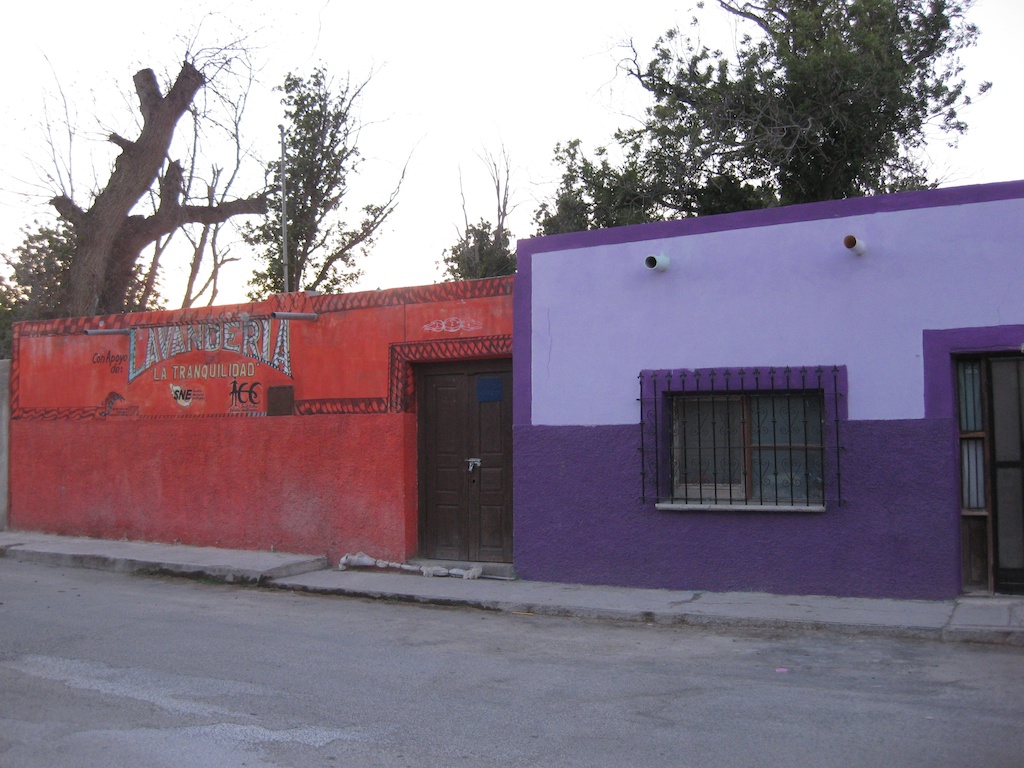
The cabin is located near the edge of the town and during the nights, it can be super dark. It is so dark that we can see way more stars in the sky than I have seen before. In fact, Laura (the lab tech @ lab manager) and I saw a shooting star on the first night that I was here! We also do not have to worry about doing our laundry because we just drop it off at the laundromat and pick it up the next day! How awesome is that? Plus, it only costs 50 pesos ~ USD 5!Interestingly, if the laundromat is closed, we just have to knock on the door next door (the purple one) because the owner lives just next door!


CC is a very laid back town. In the afternoon, while walking around town, you will always see little kids playing on the pavement, parents and neighbors sitting outside to chat, and there is just so much sign of life out here. Simple life. They do not need a lot of the luxuries we have. All they have is each other. My favorite is walking by a house where the older couple who lives in the house will always sit in their porch on their rocking chair, just relaxing and enjoying each others' company. It is like in the movie Up!. Every time I walk around town, it reminds me more and more of the days in Bayan Baru when I was a little kid.

A typical house in CC.
One of the streets in CC.

Oh, how simple life can be. 

But, all of us still have to check our emails and try our best to be on our regular work schedule. Lucky thing for us, one of the house that was rented for the guys, is owned by a hotel in town - Quinta Santa Cecilia. So they allow us to use their Internet.

Friday, June 10, 2011

Cuatro Cienegas, Mexico

My first job assignment - field sampling at Cuatro Cienegas, Mexico, one of the spots featured in The Lonely Planet. How exciting is that? Microbial ecologists typically don't spend as much time outdoors as most ecologists. A lot of our work is performed indoors with a test tube of DNA solution extracted from minute amount of samples followed by a whole bunch of data analysis in front of the computer. My previous experience with field sampling was limited to Kellogg Biological Station, which was very well equipped for field studies. This trip is definitely an eye-opening trip for me! It is always a lot easier to learn about the samples and to think of ecologically relevant questions when I get to see where the samples come from and all the biogeochemistry dynamics related to it. It is also a long one because we have a six-week long mesocosm experiment.

Cuatro Cienegas is a little town located in the state Coahuila. To get there, we had to drive from Saltillo (the capitol of Coahuila), which we flew to from US. Saltillo airport reminds me very much of Kalamazoo airport where it only has one baggage conveyer and you have to walk from the plane to the airport building. I was super glad that I was accompanied by Spanish speaking colleagues! EVERYTHING was in Spanish!

From the airport, it was about 30 minutes drive to the town area. We stayed in Saltillo for a night before driving out to Cuatro Cienegas. The lab had a rented Jeep, which we filled to the brim! Literally!! As the trip is a long one, we had to bring everything we need in the field and also materials we needed to process samples for measurements that are time-sensitive. The weirdest was bringing a dry shipper with us! It felt like R2D2 came with us. Everyone at the airport at Saltillo was curious about it. Well, we need a way to freeze our samples for DNA and RNA extraction.


Surprisingly, all the luggages placed on top of the Jeep were totally secured. It did not bulge the entire four hours drive from Saltillo to Cuatro Cienegas. The drive was quite boring, as the roads seemed endless. It was a pretty sight though, with mountains and endless desert view. It was also fun to see the dust devil, which are little dust tornados.


Once we arrived at CC and unload the Jeep, we went to get dinner at one of the local restaurant called El Doc. Like some Mexican restaurants, they serve chips and salsa as starter. In addition to salsa, they also have this pickled veggie dish that reminds me of acat! I could make that a meal if only I have some rice!

Monday, October 19, 2009

Too many methods!

Arghghggh!!! 我快發瘋了啦!! 我在做一些 meta-analysis 關於 soil respiration. 讀了那麼多文章,沒有兩個用一樣的method. 我必須用他們的raw data 來自己變換和分析. 更難的是要猜為什麼他們用哪些做法. 真不明白為什麼some research group 喜歡收那sample in 4 or 5 degrees C for 1 week 或許 acclimate to 25C for a few days before carrying out the experiment. Grrrrr...the community is going to change and microbial activity will decrease! Hai, guess that is what happens when soil scientists don't talk to microbiologists.

唉, 還是繼續認真的讀好了. 讀完後就可以回家吃飯了!! 今晚的晚餐...

Hehe, 其實這是昨天的晚餐, 但還沒吃完, 所以今天還可以吃, 明天都可以吃! 是我最喜歡的美國素菜 - 紅蘿蔔(carrot)和西蘭花(broccoli). 華人素菜忠實比較好吃, 可是久久一次還會想吃這些菜. 另一個是豆腐炒雞肉. I am missing the chap fan back home!!! Hehe, Ping is starting to countdown to going home edi. Hopefully sampling will be done by early summer then I can 安心的回家!!

Tuesday, September 22, 2009

LTER ASM at Estes Park, CO

As most of you already know, I attended a conference at Estes Park, Colorado early last week. The conference is for all the scientists who works at the Long Term Ecological Research sites all over the world. This is the first time I attended a conference on my own (the PI doesn't count since I only saw him twice the entire conference, once when I had to present my poster). I was nervous about being alone before the conference but I get to meet with a bunch of people who are also from KBS on the plane ride to Denver, CO. We figured each other out since we all have our poster tubes to carry.

The trip from East Lansing, MI to Estes Park, CO is the longest trip I have ever had within the US. I left home around 7.30am (ah boy have to be at work at 8am so we have to leave a little early) to catch the 8.30am shuttle (Michigan Flyer) that will take me to Detroit airport. We arrived Detroit at about 10.30am and hang out at the airport for another two hours until our plane to Denver at 12.30pm. The plane ride is only 3 hours. I love direct flights! No changing gates/terminal hassle! We arrived Denver at about 2pm (Denver is 2 hours earlier than MI) and we had to wait for another 2 hours before our scheduled shuttle to Estes Park at 4pm. Luckily I have already get to know a few people by then so it doesn't feel that long. The shuttle to Estes Park is another 2 hours. I was pretty excited to be in Colorado but the bus ride was no fun at all because I started to get dizzy when we were close to Estes Park. All those winding roads!! All the car rides to our house back in Batu Feringghi sure did no help at all! We finally arrived at theYMCA at 6.30pm. That is exactly 13 hours since I left my apartment in East Lansing! This is more than halfway back to M'sia! Hehe, can't help wishing that I am going home to Penang every time I fly.

When we get there, I felt much better because we have to check-in and rush to get dinner which was served only until 7pm. After dinner was the graduate student social so it distracted me from thinking about being dizzy. The food there is definitely great! We have some kind of potato dish every meal and I definitely had ate tons of sweet potatoes!! They also serve pineapple and oatmeal for breakfast, which are two of my favorite food! They definitely serve us tons here. We get three full meals a day and then there are snacks between the workgroups sessions and during the poster sessions at night. For snacks, they serve popcorn, chips and salsa or cookies. When we check-in, we were given a coffee mug and the program book. I thought that the coffee mug is a really good idea because it sure help reduce washing cups during the three main meals and cut down on the use of disposable cups during snack times and mixers.

Leila and I stayed at the Rainbow Lodge. We got a room that has two double-decker bunk beds and a queen size bed. Can you imagine 6 girls staying in this room with only one bathroom? Disaster! Especially since we all have to get up at the same time for breakfast and morning talks and then probably go to bed at about the same time too! Thankfully, it was just the two of us.
The first few days were pretty intense as I have workshops back to back with plenary talks. All in all, I was glad to be part of the conference. I definitely do learn way more from this meeting than the super huge American Society of Microbiology annual general meeting. This conference is much more interactive and allow graduate students the opportunity to be part of the discussions. The most beneficial part is to be able to interact with the graduate students from the labs that publishes the papers that I always read about.

It almost feels like I was back at Marine Biological Laboratories at Woods Hole, MA. The environment is great! The blue skies and nice cooling weather is definitely brings the mood up! I get to see awesome blue skies while walking to the main auditorium area from the Rainbow Lodge and lovely skies full of stars at night while walking back. Yup, definitely made me think of MBL days.
Soooo unlike MI. Ever since I got back, I have been greeted with blah cloudy grey skies. Boo! I know, I know, grass is always greener on the other side. But, but, I wanna see more blue skies! :P

Sunday, September 13, 2009

Overwhelmed!!

There are so many things to tell you all!! Hehe. It is great out here! The environment is lovely, the conference is so much fun and there are sooo many things to learn! Today is only the first day of the conference and I am already overwhelmed with all the science that I can learn and be part of. The atmosphere is very laid back and everyone, including the professors, are very friendly and is very helpful and encouraging.

After several opening talks this morning, they have a panel discussion on how the LTER network influence their career paths. It is a good idea to have such discussions especially for graduate students who are close to the end of their graduate career or are unsure if they would like to go into non-academia or academia path. It also gives me an idea of the types of career I can have that still involves field work or that allow contribution to social sciences and decision makers.

After lunch, they break out into several working groups. The working group that I attended is on potential inter-site comparisons of carbon studies within the LTER network. It is definitely a great topic for workshop and we had a group with great dynamics. We are all interested in using soil respiration data to better understand the factors that drives differences in soil respiration we see from all the different environmental regimes at the LTER sites. So it gave me the opportunity to propose the incorporation of microbial growth efficiency into soil organic carbon model. Hehe, I know you all don't know what I'm talking about, but it is super exciting stuff!

The day ended with few more talks and poster session about all the LTER sites. I also met with a Singaporean who asked me if M'sia would be an interesting place to start an LTER. Hmmm...my opinion, I think it is an awesome idea! But starting an LTER requires tons of work and lots of connections. He seems pretty hype about it so maybe if he starts one, I can get a job in M'sia some day! M'sia will definitely have good representations of tropical forest ecosystem with high soil organic carbon turnover.

As I was walking back to the lodge, I looked up at the sky and wow!! I have never seen that many stars before! There are millions and millions of them! It is also sooo dark that I get to see a bunch of meteor shower. I was so mesmerized by it that I didn't make a wish until after I saw four or five of them. Hehe. Now I wish that I could go camping. Hehe...it is too much hassle though. Am just glad to be here. I could definitely see myself working out. :) Below is a picture of how dark the place is. The lights are along the sidewalks but it is so tiny and low that it is still dark enough to see all the tiny tiny stars that our eyes usually can't see when we're in the city.
Hehe, I am still so excited about this place that I am definitely not blogging coherently here. Will blog more about the place and post more photos when I calm down. All the interesting stuff that goes on in all these different LTER sites that I get to hear about is overwhelming too. Will have to digest them at some point this week. I also haven't taken as many photos since we are indoors most of the day. Will definitely have more photos when John gets here and we go out hiking.

Sunday, August 23, 2009

Fun at Kellogg Biological Station

One of the best thing about working with soil ecosystem is the field work portion. It will be great if the next lab I work will also have field work component. Hmm...*thinking of a sampling trip to the various ecosystem at Colorado* :)

This summer, I have been working a lot on experiments using soil samples from the Kellogg Biological Station. I have been driving to KBS to get samples almost every two weeks and will most likely continue to do so until shortly after harvest season. Here are all the fun stuff I get to see at KBS.
Ladybug on a soybean leaf. It is such a coincidence that the two water droplets on the beetle is right where two of its spots are, making it looks like baja hitam.

Some like it up, some like it down, some even like it by the side. :)
At each of the plots with different land management, sampling flags are placed to assist us in sampling. The position is determined based on global positioning system (GPS) and is moved every year. This particular one have become a habitat to a 'crawling plant' (argghhh!! I can't remember the correct term for it!
If I get there really early or when it just rained not too long ago, I wish I have a pair of boots!
But I love the freshness of early morning dews.
The native land plots will always have little creatures like this err...dragonfly (I think). It has become my new sampling friend. I saw it twice on two different sampling days, standing on the same sampling flag. Once on a cloudy day while another time on a nice sunny day. The first time, I managed to get a closer shot because I was sampling by that flag while the second time, I was over by another flag when I saw it landed there.
The not so fun part about sampling the native sites is this little thorny seeds. They will attach all over my shirt and pants that I always have to spend some time getting them off me before I go back.
This last trip, I almost got my first photo of a deer! I was walking through a corn field when I heard rustling. I knew at once that there are a bunch of deer in the corn field. The corn plants were already matured and were about my height. When I saw the deer through the plants, I knew it saw me too but it stayed really still. But clumsy me had to drop the soil coring tube when I tried to get my phone out of my pocket. Of course they ran away as fast as they could. There were 6 of them! I did get two of them running away though. One of them you can only see the top of its head.
Hopefully I'll get a bunch of wild animals photo during my trip to Colorado!!

Sunday, May 24, 2009

Kellogg Bird Sanctuary

Ping have always wanted to go visit the Kellogg Bird Sanctuary but every trip to the Kellogg Biological Station requires that Ping goes back to lab as soon as possible to process the soil sample (we don't want the microbial community to change too much so that we can capture the 'close-to-field' condition. Yes, by removing the core is already a major disturbance but we don't really have a choice at this point. Unfortunately, the well-known quote by field ecologists - If you choose to do field study, you have to live in the field - does not work for microbial ecologists because we can't see our subject of study!).
Now that Ping is actually staying at KBS, Ping gets to go explore the area a little. Besides the bird sanctuary, there really is not much around here except for really nice nature trails and agriculture fields. It is a good place for nature photography though because there are so many birds, squirrels, chipmunks and insects. Haha...after having experience a taste of zoom lens and DSLR camera, Ping can't help wishing she has one whenever she sees a bird resting on crop residues or up on a tree. But, Ping still managed to capture quite a few nice shots and had lots of fun at the Bird Sanctuary!

There are two lakes in the Bird Sanctuary and are kept enclosed, probably to prevent people from getting too close to it. But, since most of the ducks/geese that resides there can fly, you do get to see them upclose. The Canadian geese are pretty huge but this little boy sure is not affected by it.
Besides the boring Canadian geese, there are quite a few swans too. While they look pretty when sitting down or swimming, they have huge and ugly looking feet. :P Reminds Ping of the term mummy and tua ee always say - 'tua kah poh'.


There is also a mum swan trying to hatch her eggs but the dad swan was very mean to Ping.
The highlight for Ping is the goslings!!! There were two families just sitting on the grass and Ping was slow and still enough that they did not feel threatened when Ping get down to their level!
Aren't they cute??? They are so fluffy, makes you want to cuddle them! Hehe. Check out how they sleep...
From Bird Sanctuary

Doesn't that seem like it will be hard for them to get up and run when a potential predator approach?

There was also two families of black swan. They were much more protective of the babies because there were other black swans who would not let Ping near the families at all.
Besides the free-roaming ducks, geese and swans, the Bird Sanctuary also has a few owls and close to endangered birds that are caged. One surprising thing - owls eat rats!! Guess Ping have never really thought about what they eat so was surprised to see there were dead rats in their food bowl! Ewww!!!
Oh, there was also an owl that makes chattering noise like when Ping gets cold! Am pretty sure the owl was not cold because it was a very hot evening. It must have meant something - maybe like 'Go away and don't bother me'. Hehe.

The one above looks mean but this one below looks much nicer, like a grandpa type. Hehe. It reminds Ping of the Owl cartoon that taught us ABC when we were a kid. Arghggh! Can't remember the name of the Owl now. (Mei Ling: You know which video tape I'm talking about right???)
Of course, there was also the chipmunks. There are tons of them at KBS!!
A nice quote on a bench...
All the way from Malaysia (actually, this one is from Indonesia). It is funny seeing this rooster in a cage when in M'sia, they are just walking around the kampung.
The one thing that was missing was the ducklings! Ping didn't see any at all! But there are tons on MSU campus that Ping will have to go visit when Ping get back on campus!